Tank washing and food safety: why summer is the most delicate season
High temperatures speed up microbial growth even during the downtime between one transport and the next. Here’s why internal washing of food tanks demands even more attention in the warmer months — and how Clean Wash approaches the season.
As the warm season arrives, anyone transporting bulk food products — juices, wine, milk, oils, beverages — knows that the main risk isn’t just the current load, but everything left inside the tank between one trip and the next. Heat accelerates biological degradation: just a few extra degrees are enough to turn a minimal residue into a breeding ground for bacteria, yeasts and mould, with direct consequences for the quality of the next load, even when it’s the same product.
Industry guidelines have long confirmed this: tanks used for food transport need to be washed more frequently precisely to prevent organic residues, even minimal ones, from degrading over time — a principle that becomes even more critical in summer due to higher temperatures.
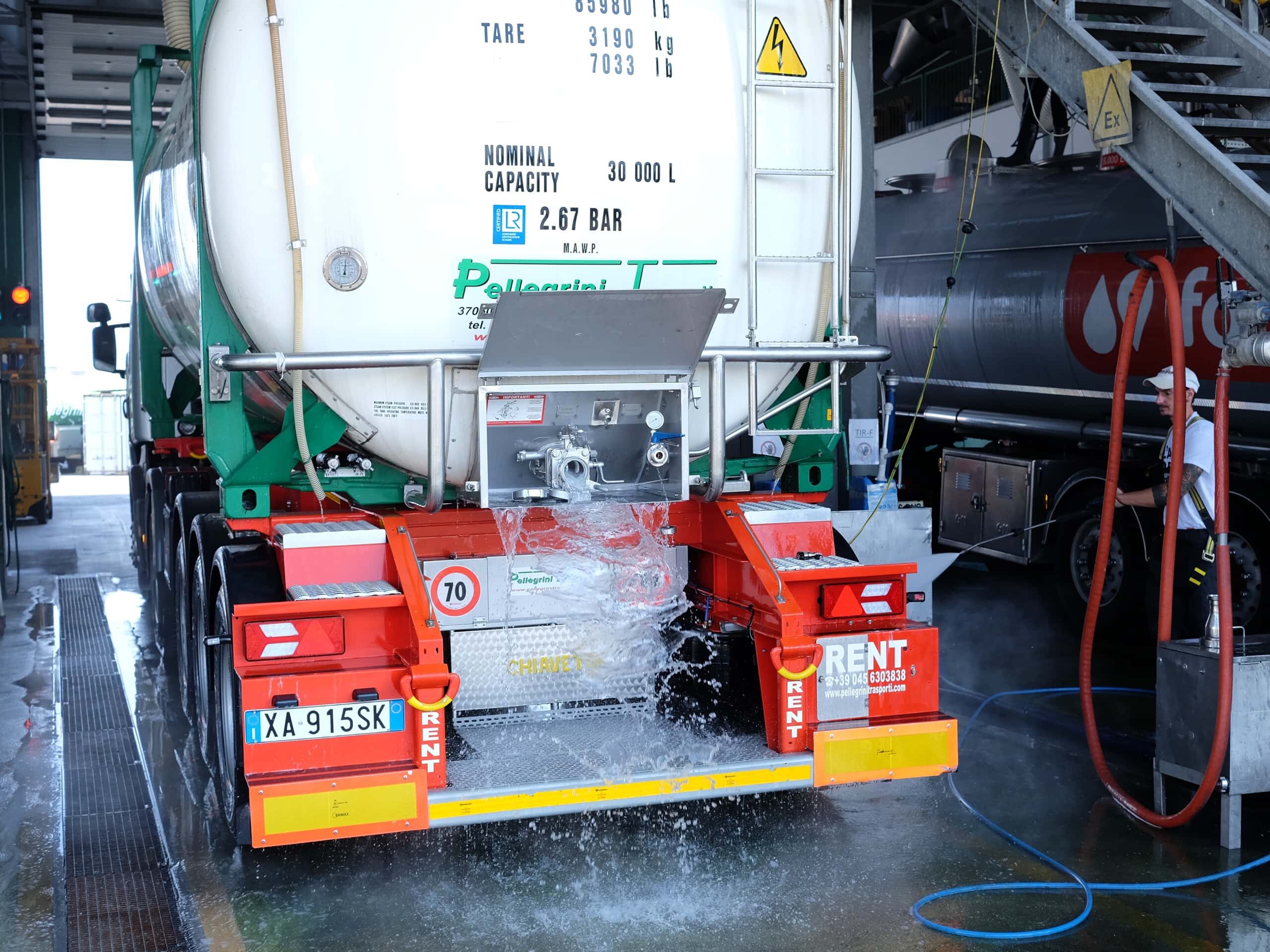
That’s why, in the hottest months, a washing facility does more than simply “rinse” the tank: the cycle includes dedicated detergents, a sterilization step when required (up to 180°C with steam filtered at 5 microns) and drying with filtered hot and cold air, to prevent residual moisture from becoming a risk factor in itself before the next load.
Clean Wash carries out this type of operation every day for tanks, silos and refrigerated semi-trailers, with dedicated pathways for the food sector and constant monitoring of the facility’s hygiene conditions, ensuring the same level of service regardless of the season.